
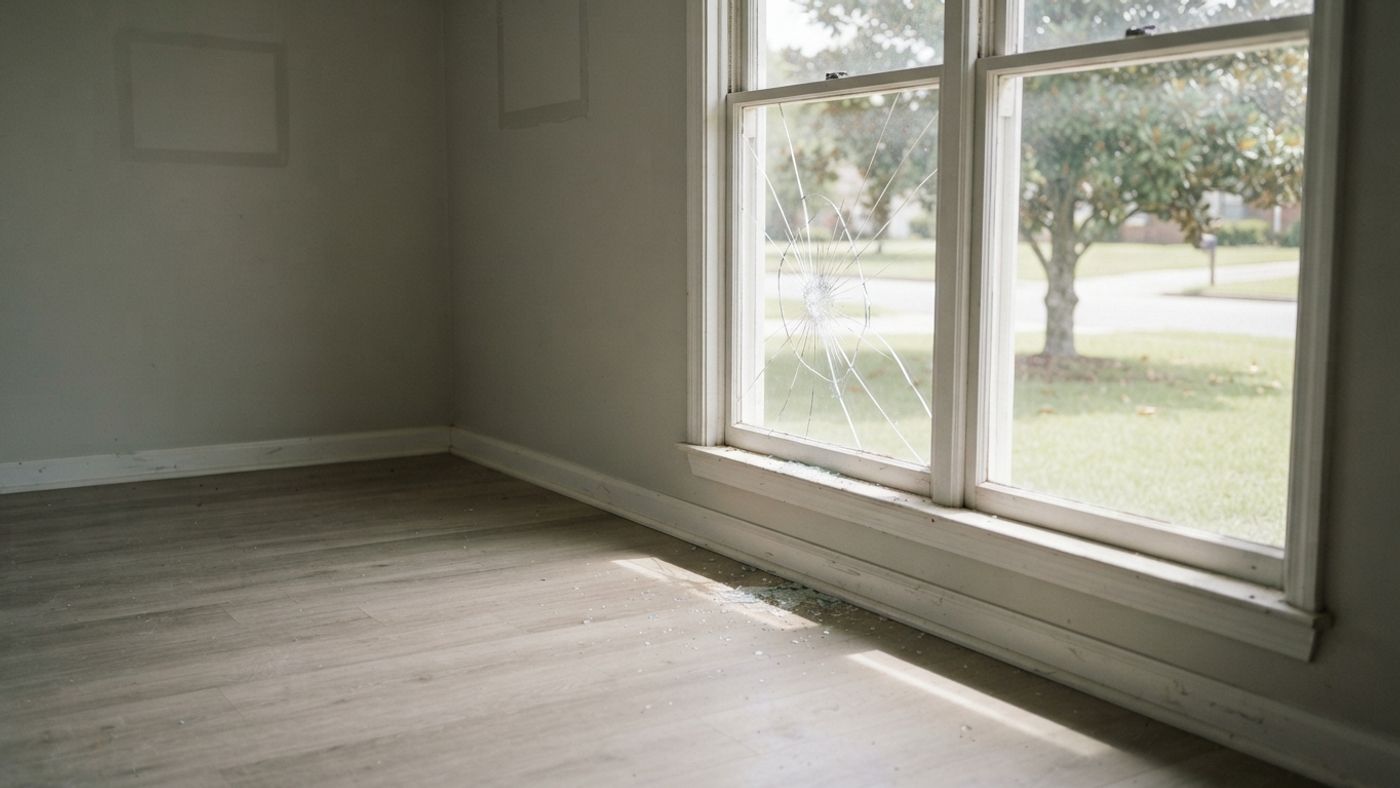
Under the standard ISO HO-3 homeowners form, coverage for vandalism and glass breakage stops once a dwelling has been vacant for more than 60 consecutive days. Some insurers set the line at 30 days, and the exact number sits in each policy. For owners and servicers holding empty homes in North Carolina, South Carolina and Florida, that clock starts when the house empties, not when someone remembers to call the carrier.
The word “vacant” also carries a specific meaning. Insurers generally treat a home with furniture and belongings still inside as unoccupied and a home with none as vacant, and policies can define the terms differently or not at all. Some carriers count a home as vacant after 60 consecutive days with no people and no belongings. Because the definition decides which exclusions apply, it is worth reading before a home goes empty, not after a loss.
What Does a Vacancy Clause Take Away?
The standard exclusions are vandalism, malicious mischief and glass breakage. Newer forms can also exclude loss that follows a vandalism event, such as a fire set by intruders, and many insurers will decline to renew a home that stays vacant. In North Carolina, a 2004 notice from the NC Rate Bureau extended the vandalism vacancy period in the state’s homeowners program from 30 to 60 days, though policies written today can differ. In Florida, standard policies commonly limit coverage after 30 to 60 days of vacancy.
A vacant home policy fills part of that gap, but not all of it. These policies are unlikely to cover problems that come from poor maintenance, so a roof leak that went unfixed for months can be treated as neglect, not as a covered loss.
What Does Vacant Home Insurance Cost, and What Does It Require?
Vacant dwelling coverage costs more than a standard policy. Published estimates run from roughly 25% to 85% above a standard homeowners premium, which is a wide enough range that quotes from several carriers are the only reliable number. Some policies also carry their own inspection requirements or vacancy limits, so the terms matter as much as the price. Vacant home policies are also commonly written for terms of 3, 6 or 12 months instead of a standard annual term, so a long vacancy means tracking renewal dates as well as the 60 day clock.
How Do Inspection Records Support Coverage on an Empty Home?
Vacant risk is priced and judged around how quickly damage gets found. A dated photo set from each visit shows the condition of the home before a loss and the date it was last checked, which is the evidence an adjuster has to weigh. A schedule that already meets a lender’s inspection window, such as the 20 to 35 days in Fannie Mae’s Servicing Guide, also gives an owner a regular record without adding separate trips.
This is general information, not insurance advice. Policy language controls, so confirm the vacancy terms with the carrier or broker.
East West Maintenance coordinates scheduled inspections with dated photo reports for property managers and asset holders with vacant homes across North Carolina, South Carolina and Florida.