
About ten people die from unintentional drowning in the United States every day, according to the CDC, and 87 percent of drowning deaths among children under five happen in a home pool or hot tub rather than a public pool. With roughly 10.4 million residential pools across the country, an unmaintained or unsecured pool on a vacant property is not a cosmetic problem. It is a liability sitting in plain sight.
Premises liability law holds property owners responsible when someone is injured on their property because of an unsafe condition, and pools sit near the top of that risk category. Courts have applied the attractive nuisance doctrine in cases where a child entered an unfenced pool without permission, meaning even trespassing does not automatically protect an owner from liability if the pool was not properly secured. Wrongful death settlements tied to premises liability negligence average close to 973,000 dollars, with cases involving clear fault and lasting harm regularly reaching into the millions.
Why Vacant Pools Present Unique Risk
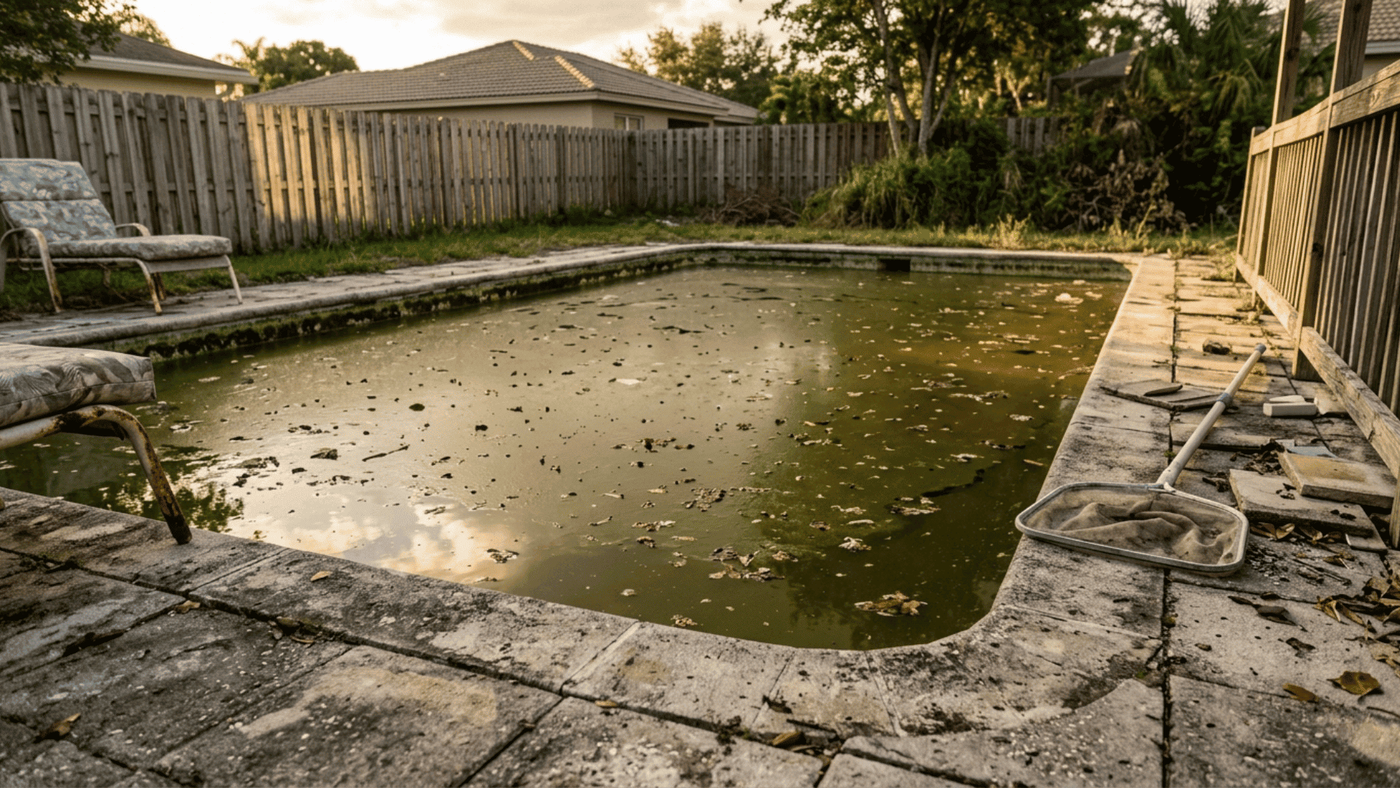
A pool that sits unattended behind a foreclosed or vacant home loses its chemical balance within days and its clarity within weeks, turning green and opaque well before anyone notices from the street. That opacity hides depth, obstructions and drowning hazards from anyone who does gain access, whether that is a trespasser, a neighborhood child, or someone checking the property for the lender. An unmaintained pool also draws mosquitoes and attracts exactly the kind of attention that turns into a code complaint or a liability claim before the property ever sells.
Insurance carriers treat pool related claims with particular scrutiny, and a policy on a vacant property may not respond the way an owner expects if the pool was left without basic safety measures, fencing, covers, or secured access. That gap between what a policy assumes and what an unmaintained pool actually looks like is where liability exposure tends to grow fastest, often without anyone realizing it until an incident forces the question.
Where Regular Pool Service Fits Into Vacant Property Management
Routine pool service on a vacant or REO property, balancing chemicals, checking fencing and covers, and confirming the water stays clear enough to see the bottom, does more than protect the asset's appearance. It closes the gap between what an insurance policy assumes about the property and what a neighbor or code inspector would actually find if they looked. That kind of consistent attention is part of what separates a property that sells cleanly from one that generates a liability file before it ever closes.
A pool does not become a hazard overnight. It becomes one gradually, through the weeks nobody was checking on it, which is exactly why it needs to be on the same maintenance schedule as everything else on the property.