
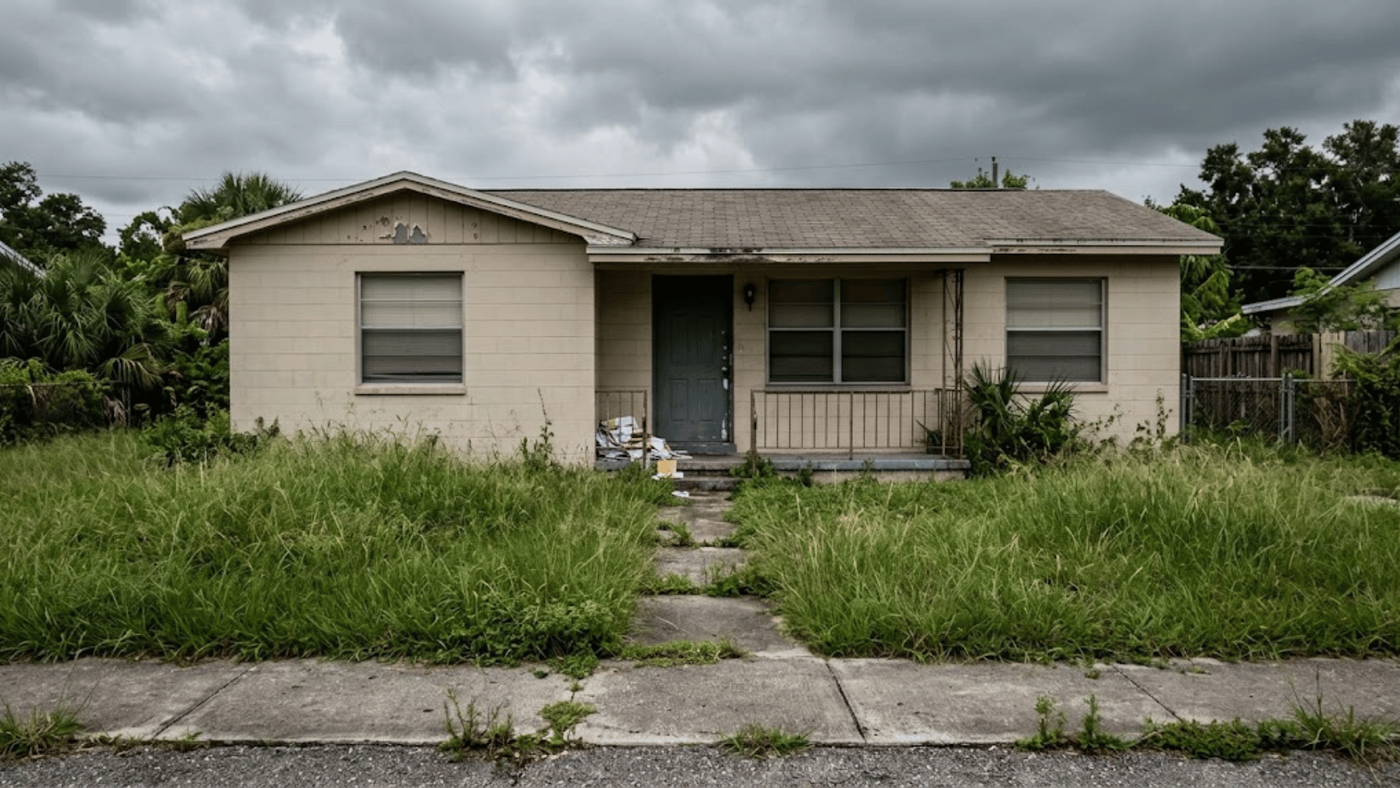
A single zip code in Saint Petersburg, Florida posted the highest zombie foreclosure rate in the country in the third quarter of 2026, with 38.3 percent of its in-foreclosure homes sitting abandoned. Nationally, the zombie rate held at 3.3 percent of the 259,666 properties in foreclosure, essentially flat from the prior quarter. A second Florida zip code, New Port Richey's 34652, also landed in the top five nationally at 32.6 percent. Investor-owned homes, meanwhile, sat vacant at 3.5 percent nationwide, nearly three times the 1.3 percent vacancy rate for all residential properties.
This is not a one-quarter anomaly for the Saint Petersburg zip code in question. The same area has ranked among the nation's highest zombie rates in multiple quarters this year, cycling near the top of the list alongside zip codes in Baltimore and Cleveland. A zombie foreclosure happens when an owner walks away from a property before the foreclosure process finishes, leaving the home unoccupied and effectively unmanaged for months at a stretch while the paperwork works its way through the courts.
Investor Ownership Changes the Vacancy Math
The gap between investor owned vacancy and the national average is the more striking figure. Out of nearly 25 million investor owned residential properties nationwide, close to 880,000 sat vacant in the third quarter. That is a vacancy rate nearly three times higher than owner occupied housing carries on average. A property held by an institutional owner is more likely to sit empty between tenants, between renovation phases, or while working through a disposition strategy than a home where the owner actually lives.
A vacant, investor owned property is also a property that nobody notices until something goes wrong. There is no homeowner checking the mail, no neighbor mentioning an overgrown lawn to the person who lives there, no one adjusting the thermostat before a cold snap. In Florida especially, an unoccupied home left unchecked for a season can develop pest problems, roof and gutter issues from storm debris, or code violations from unmowed grass, and by the time anyone notices, the fix costs far more than routine upkeep would have.
Regular Eyes on the Ground Change the Outcome
This is precisely why a standing inspection cadence matters more for investor and REO portfolios than for owner occupied housing. A property maintenance partner walking a route on a set schedule catches the roof leak before it becomes a mold claim and the overgrown yard before the county sends a notice. For portfolios concentrated in Florida, South Carolina, and North Carolina, where storm exposure and fast plant growth accelerate deterioration, that inspection cadence is not optional maintenance. It is the difference between a property that holds its value through a vacancy period and one that needs a full rehab before it can go back on the market.
Zombie foreclosures and investor vacancy will keep showing up in the data as long as the foreclosure pipeline keeps moving. The properties that come out the other side in good shape are the ones someone was actually checking on.