
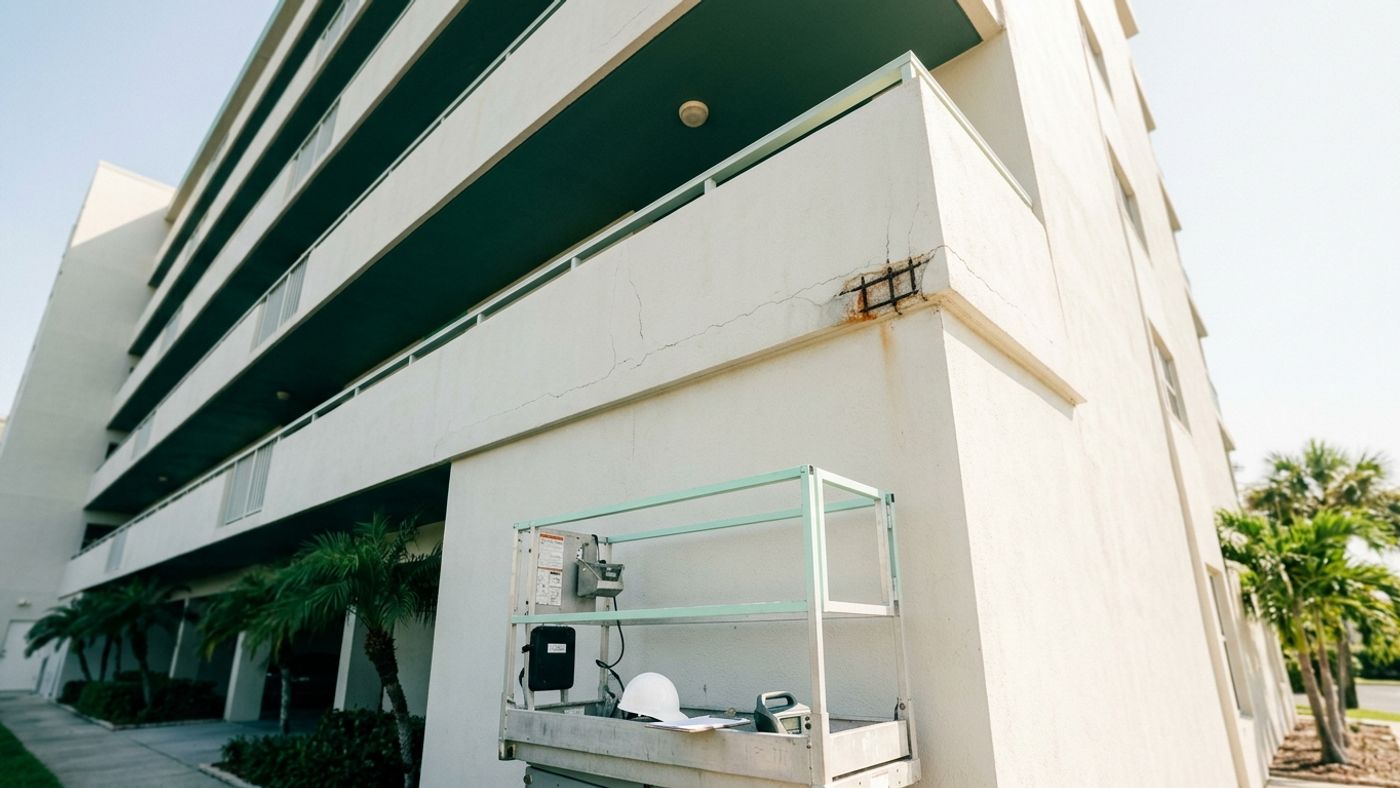
Florida's condo milestone inspection law carries a major deadline on December 31, 2026, and for many associations it is the point where two separate requirements collide at once. Buildings that reach their milestone in 2025 or 2026 must complete a structural milestone inspection under Florida Statute 553.899 by that date, and any association still coordinating its Structural Integrity Reserve Study with that inspection has the same December 31, 2026 deadline as a hard backstop. For property teams maintaining condominiums and cooperatives in Florida, this is the deadline that turns deferred maintenance into an immediate, documented obligation.
The law, known as SB 4-D, followed the 2021 Surfside condominium collapse and applies to condo and cooperative buildings three stories or taller. The statewide baseline requires a milestone inspection by December 31 of the year a building turns 30, though local jurisdictions along the coast have the option to require it earlier, at 25 years, and a number of South Florida jurisdictions have kept that shorter timeline. A licensed engineer or architect performs a Phase 1 visual inspection, and if that inspection finds substantial structural deterioration, a more detailed Phase 2 inspection follows, along with whatever repairs the findings require. For budgets adopted on or after December 31, 2024, associations can no longer vote to waive or reduce reserve contributions for structural components identified in a SIRS.
What the inspection actually looks for
A milestone inspection focuses on structural integrity: load bearing walls, primary structural systems, and other elements that keep a building standing rather than cosmetic wear. Common findings include corrosion in structural steel or rebar, cracking or spalling in concrete, and water intrusion that has reached structural components rather than stopping at a surface finish. These are the same conditions that ordinary maintenance, if it catches them early, can address at a fraction of the cost of a Phase 2 structural repair years later.
Where maintenance fits before the report is filed
An association does not have to wait for the milestone inspection to surface a problem it could have caught sooner. Routine maintenance on roofs, exterior walls, balconies, windows, and drainage systems reduces the odds that a licensed inspector finds substantial deterioration rather than ordinary wear. Balcony and railing connections, exterior stucco and coating condition, and any visible rust staining bleeding through concrete are all worth a maintenance pass well ahead of a scheduled inspection date, since documented upkeep can support a lower cost Phase 1 outcome rather than triggering Phase 2.
Building the compliance record
Associations approaching the December 31 deadline should confirm their Phase 1 inspection is either scheduled or complete, and that their SIRS reflects current, not outdated, cost estimates for major components. Keeping dated records of routine repairs, along with contractor invoices and inspection reports, gives an association a documented maintenance history that supports its inspection findings rather than leaving the milestone report as the only record of the building's condition. It is also worth confirming whether the association's SIRS has been coordinated with its milestone inspection timeline, since Florida law allows the two to be completed together as long as both land by December 31, 2026, but only if that coordination was planned for rather than discovered late.
The deadline does not change what a well maintained building looks like structurally. It changes how soon that condition has to be documented, and by whom.