
Forecasters put the odds of a very strong El Niño this fall and winter above 90%, and the Southeast carries the strongest wet signal in the national winter outlook. For anyone responsible for vacant property maintenance in the Carolinas and Florida, that points to a wetter than usual winter. Rain is exactly what finds the weak spots in a roof, a gutter or a foundation grade.
The outlook favors above normal precipitation across much of the southern tier of the country, with the signal running strongest along the Gulf and Southeast coasts. Florida climate researchers note that El Niño typically brings wetter conditions to the region, felt most over the Florida peninsula but also across the northern Gulf Coast, the coastal Carolinas and south Georgia. Heavy rainfall and severe weather, including tornadoes, become more likely over the peninsula in particular. Forecasters are clear that these impacts become more likely with a strong event but are never guaranteed. Even so, the odds are tilted enough to make the weeks before winter more valuable than usual.
Where wet weather does its damage
Water rarely announces itself. A small roof leak, a gutter that overflows onto a wall, or soil that slopes toward the foundation can each let moisture in slowly. In an occupied home, a ceiling stain gets noticed within days. In a vacant one, the same stain can sit for weeks while the drywall, insulation and flooring absorb water.
Lingering moisture is also what leads to mold, and mold makes a repair bill much larger than the leak that caused it. Saturated soil adds pressure around foundations and crawl spaces, and repeated storms mean there is little time for anything to dry out between rounds of rain. A winter of frequent systems, rather than one big event, wets the same weak spots again and again.
Cold air can still push into the region and meet that moisture, so exposed plumbing, outdoor spigots and irrigation lines still deserve a look before the first freeze. One hard freeze can split an unprotected pipe.
A fall checklist for vacant property maintenance
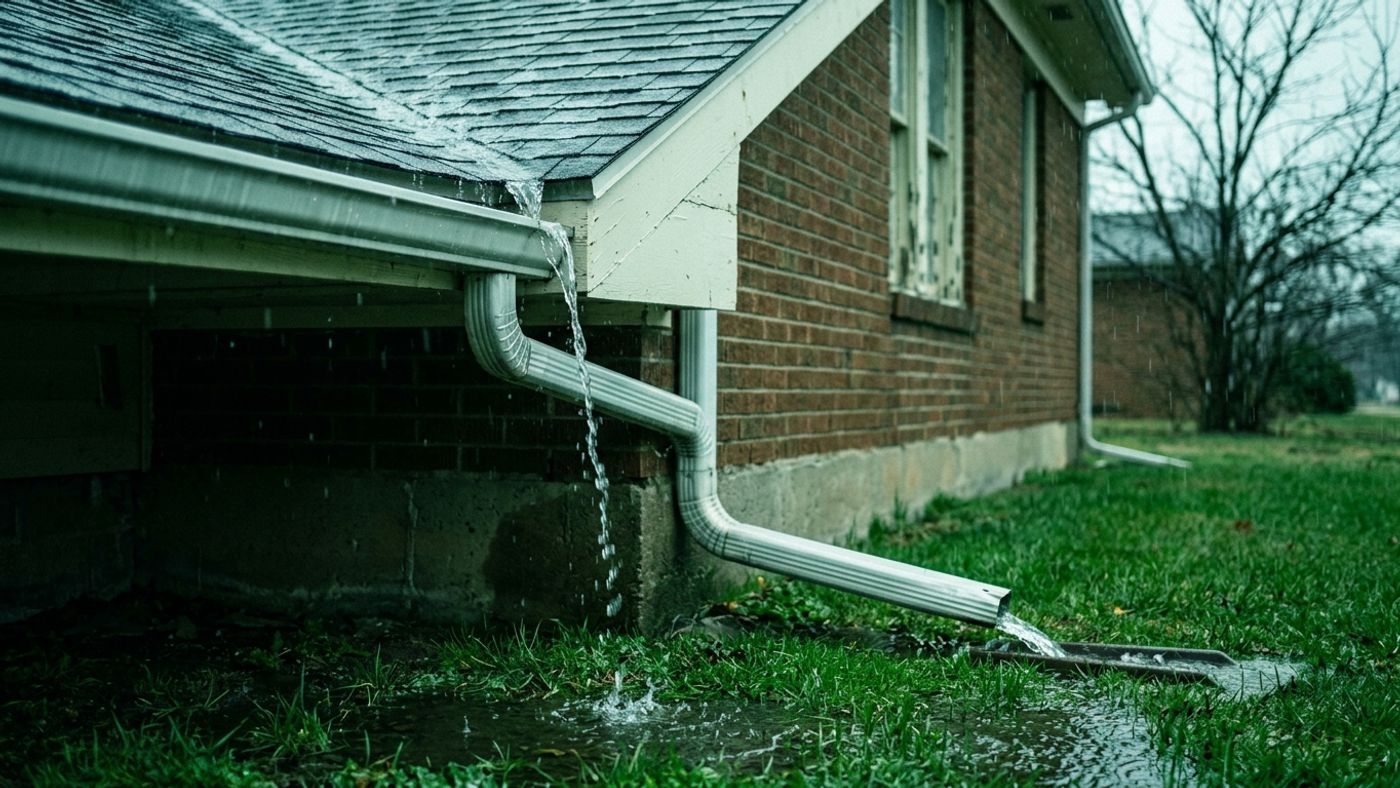
Fall is the best window for prevention. Clean gutters and downspouts once the leaves drop, and make sure downspouts discharge well away from the house. Inspect the roof for lifted shingles, worn seals and damaged flashing. Check that the ground slopes away from the foundation rather than toward it. Look under sinks, around water heaters and along ceilings for stains or soft spots, and test any sump pump on the property. Seals around windows and doors deserve a quick check too, along with siding, caulking and trim where water can find a way in. In the attic, look for damp insulation or staining under the roof deck.
After every heavy rain, a return visit confirms that the fixes held. Doing that across many properties is mostly a scheduling challenge, and vendors booked in October are far easier to arrange than emergency calls during a January storm. Leaving fixes until the first big system arrives means doing them in the rain.
A wet winter is likely, not certain, but a dry October is the best time to get ready for it.