
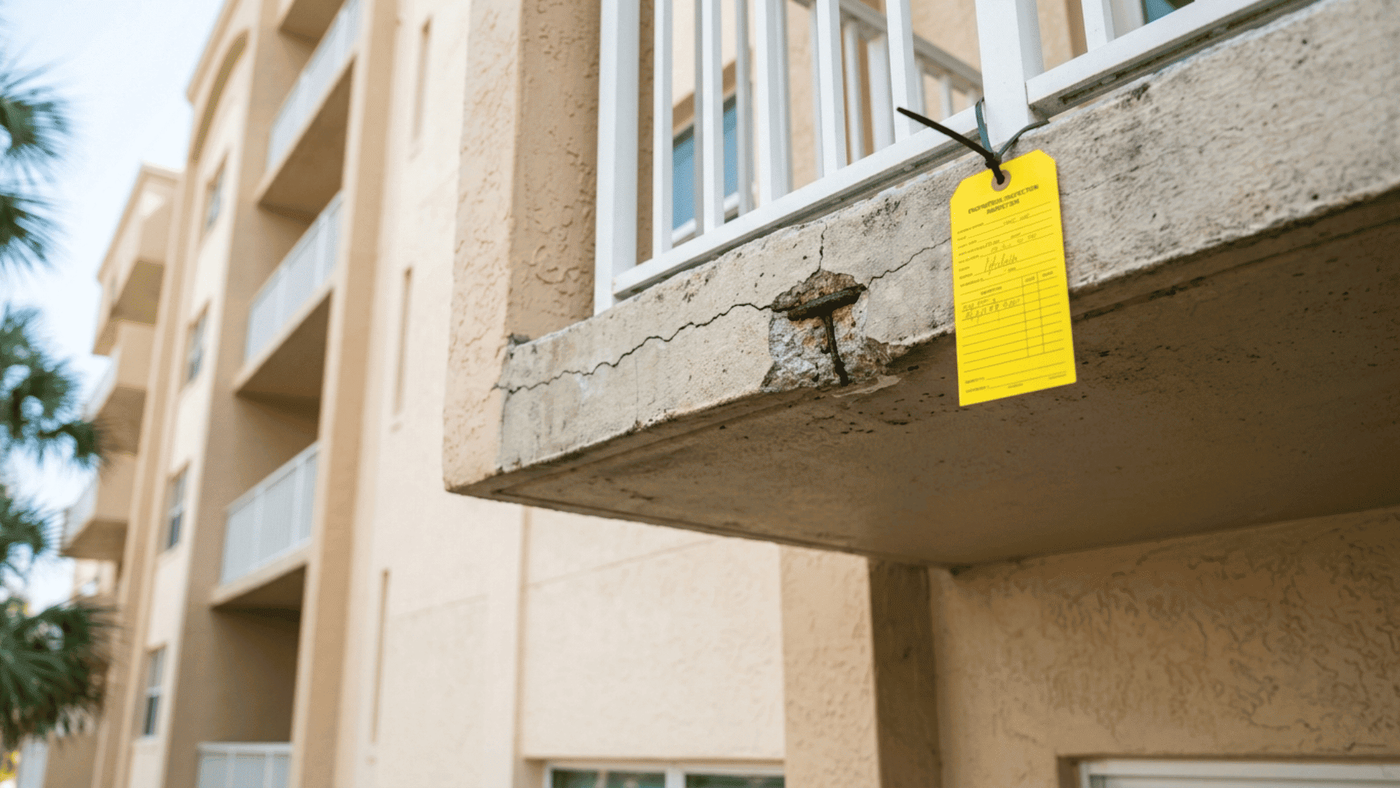
Florida condominium buildings reaching 30 years old in 2026 face a December 31 milestone inspection deadline, and boards that fail to act afterward can be hit with fines of 500 dollars a day. The law, born from the 2021 Surfside collapse that killed 98 people, requires structural evaluations of aging condo and co-op buildings statewide, and 2026 is the year the deadlines start landing in large numbers.
Roughly 900,000 Florida condo units now face milestone inspection requirements, and failures found at the Phase 2 stage can trigger special assessments between 134,000 and 400,000 dollars per unit. Under Florida Statute 718.112(2)(g), associations can no longer waive reserve funding for eight mandatory structural components, including the roof, load bearing walls, fire protection, plumbing, electrical and waterproofing. Full reserve funding for those components was required to begin by January 1, 2026, closing a loophole boards had used for decades to keep monthly fees artificially low.
A Law Written for Structure, Not Curb Appeal
Milestone inspection focuses on structural integrity rather than routine upkeep, which means the property inspection a board schedules for compliance is not the same as the inspection a maintenance company runs on a regular basis. Boards that treat the two as interchangeable risk missing the deferred exterior maintenance that shows up between formal structural reviews, the kind of deterioration that eventually turns into a documented finding at the next inspection cycle.
Non-structural components including landscaping, pool equipment and clubhouse furnishings can still be waived by a majority vote, but that flexibility is disappearing too. Fannie Mae and Freddie Mac have flagged missing reserves and missing structural integrity reserve studies as project eligibility issues since 2022, and buildings without them risk being placed on a non-warrantable list that cuts off conventional financing for buyers.
Where Regular Property Inspection Work Fits In
Associations that keep a documented maintenance record between milestone cycles walk into the formal inspection with fewer surprises and a clearer picture of what a reserve study needs to fund. Regular exterior inspection catches the small things, a cracked stucco panel, a failing sealant joint, standing water against a foundation, before they become the kind of deferred maintenance that drives a six figure special assessment. That documentation also gives engineers a head start once the milestone deadline arrives.
Boards that treat inspection as a once a decade compliance exercise are the ones most likely to be surprised by what Phase 2 finds. The ones that keep watching in between are the ones least likely to need a 400,000 dollar assessment to fix it. With the December 31 deadline approaching for buildings reaching 30 years old this year, and financing eligibility increasingly tied to reserve compliance, the boards moving early are the ones protecting both their building and their owners' ability to sell.