
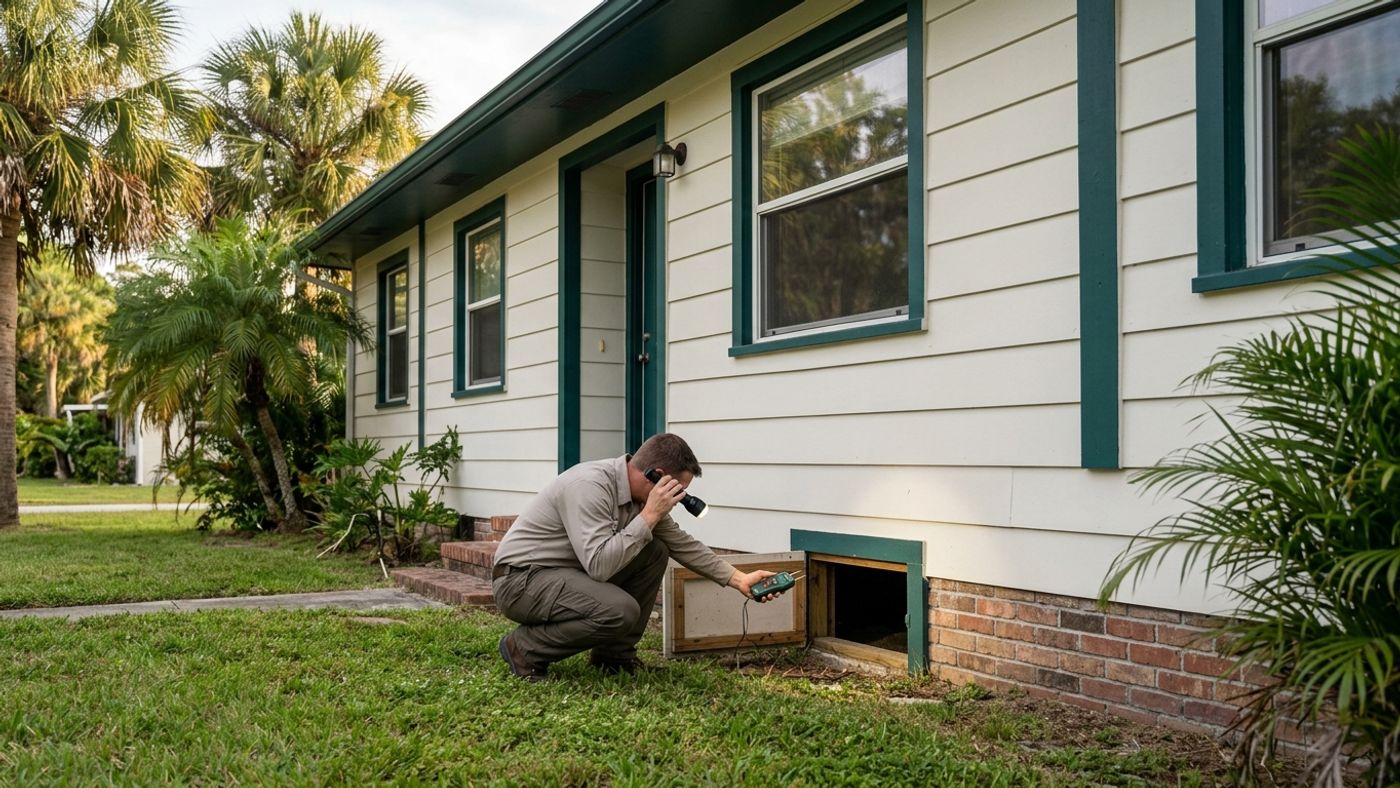
Florida law requires a wood destroying organism inspection on most real estate transactions in the state, reported on a specific form the Florida Department of Agriculture and Consumer Services created under Chapter 482 of the Florida Statutes. For anyone responsible for vacant property maintenance in Florida, that requirement decides whether a distressed or REO sale closes on schedule or gets delayed by a finding nobody saw coming.
The inspection itself, known as a WDO report or Form FDACS 13645, has to be performed by an inspector licensed under the state's Structural Pest Control Act and carrying a pest control identification card at all times. VA loans require the report on every Florida purchase. FHA lenders require one when an appraiser flags evidence of infestation, and conventional lenders decide case by case. The report covers termites, wood decaying fungi, powderpost beetles, and old house borers, and it has to be kept on file by the pest control company for at least three years.
Vacant and REO Homes Carry Higher WDO Risk
A home with nobody living in it loses the small habits that keep termite and fungal activity in check. No one is running the air conditioning to hold humidity down, checking the crawl space after a storm, or noticing water pooling against the foundation. Those are exactly the conditions a WDO inspector is trained to look for, and Florida's contract language commonly includes a WDO contingency clause that lets a buyer renegotiate or walk away if the report comes back positive.
The inspection focuses on specific trouble spots: the foundation perimeter, an accessible crawl space, the attic, and any wood members visible at the property line. On a vacant property these are also the areas most likely to have gone unchecked for months. Active termite activity or visible fungal decay found at this stage doesn't just add a repair bill, it can reopen negotiations on a sale that was already close to closing.
Where Field Services Fits In
Regular maintenance visits on vacant and REO inventory catch many of the same conditions a WDO inspector is looking for, just earlier and before a buyer's lender is involved. Clearing debris and vegetation away from the foundation, keeping gutters and drainage functional, and flagging visible moisture or wood damage during routine checks addresses the underlying conditions a termite inspection is designed to surface, rather than reacting to them once they show up on a closing document.
A clean WDO report reflects the condition of a property on the day it's inspected, not its maintenance history. For property sitting vacant ahead of a sale, the two are closely connected, and consistent upkeep between listing and closing is often what keeps that report clean. That's a meaningful gap for anyone timing a sale around a specific closing date, since a positive finding late in the process can add weeks to a transaction that was otherwise ready to go. Treating routine upkeep as part of the sale timeline, not a separate task from it, is what keeps a vacant property from becoming the reason a deal slips.