
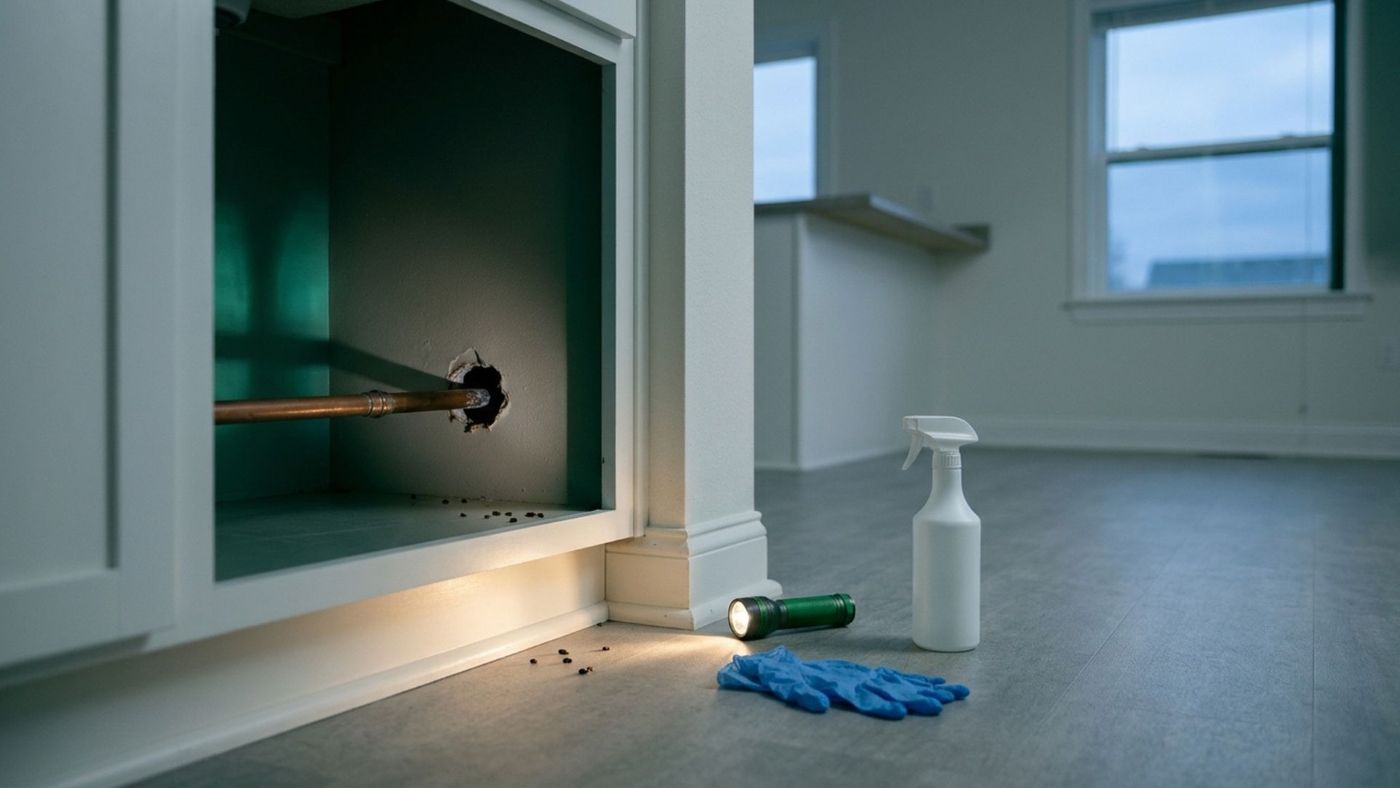
Rodents are most likely to move into a vacant house as nights turn cold, because an empty home offers shelter with no people, no noise and no one watching. Rodents invade an estimated 21 million U.S. homes each winter, and a mouse can enter through a gap the size of a dime. The fix is a three part routine: look for signs on every inspection, seal the entry points, and clean droppings with a wet method, never a broom or a vacuum.
Why Are Vacant Houses Attractive to Rodents?
Rodents look for three things: shelter, food and water, and a quiet place to nest. A vacant house can supply the first and third by default. Nobody opens doors, runs the water or turns on lights, so a nest in an attic, wall void or crawl space can grow for weeks before anyone sees it. Clutter left behind, stored items, overgrown shrubs against the walls and branches touching the roof all make the job easier.
The species differ by region. In Florida, the Norway rat is rare and the roof rat is the one that tends to cause trouble. University of Florida extension specialists note that roof rats take up residence in attics, soffits, hollow walls and outbuildings, so an inspection that stops at the ground floor misses the usual hiding places.
What Are the Signs of Rodents in a Vacant House?
Pest control professionals point to a short list of signs. Look for them on every visit:
- Droppings along baseboards, in cabinets, on attic insulation and near entry points.
- Chewed material, including gnawed wires, insulation, cardboard and wood.
- Nests, which are usually built from shredded paper, fabric and insulation, often hidden in clutter or in attics and wall voids.
- Entry openings around pipes, vents, utility lines, the roofline and the foundation.
- Scratching or scurrying sounds in walls and ceilings, which are heard most easily in a quiet house.
Chewed wiring deserves a note in the file. Gnawed electrical wiring is a repair item and a safety concern, so it should be flagged to the owner or manager rather than treated as routine cleanup.
How Do You Safely Clean Rodent Droppings in a Vacant Home?
Rodent droppings, urine and nests can carry disease. Illnesses linked to rodents include leptospirosis, salmonellosis and hantavirus, and the greatest risk comes from breathing in dust that has been stirred up. That is why sweeping and vacuuming are the two things not to do. Federal health guidance sets out a wet cleaning method:
- Ventilate first. Open all doors and windows for 30 minutes before cleaning, and leave the area while it airs out.
- Put on protection. Wear rubber or plastic gloves at minimum. For a heavy infestation, add coveralls, boots or shoe covers, goggles and a respirator with a HEPA filter.
- Spray, do not sweep. Soak droppings and urine with a household disinfectant or a fresh bleach solution of 1.5 cups of bleach per gallon of water. Let it sit for 5 minutes or as the label directs.
- Wipe up with paper towels, discard them in a covered garbage can, then mop or sponge hard surfaces.
- Handle dead rodents and nests the same way. Spray, soak, then double bag and discard.
- Wash hands thoroughly with soap and water after removing gloves.
Health guidance calls for extra precautions in vacant dwellings with large numbers of rodents. If there is any sign that rodents have gotten into heating and cooling ducts, bring in a professional pest control service. A heavy infestation in a vacant house is a job for trained, equipped crews, not a quick cleanup on an inspection visit.
How Do You Keep Rodents Out of a Vacant Property?
Cleaning without sealing only resets the clock. Exclusion is the part that lasts:
- Seal gaps and holes. Mice can squeeze through openings the size of a dime and rats through spaces about the size of a quarter. Check around pipes, vents, utility lines, the garage door and the foundation.
- Install door sweeps and screen vents and chimney openings.
- Cut back vegetation and branches that touch the roof or walls, and clear leaf litter and debris from the foundation.
- Remove food, clutter and trash left inside, and pick up fallen fruit in the yard.
- Fix moisture problems. Leaks and standing water draw rodents as well as mold.
- Bring in a licensed pest control professional at the first sign. A professional can trace the source and the entry points that traps alone miss.
How Should Rodent Findings Be Documented?
Photograph droppings, nests, chewed material and entry points before any cleanup, and note the date, room and location. Record what was sealed and what was treated. A dated record shows when a problem first appeared, what was done about it and whether it came back. That matters when an owner, servicer or insurer asks what happened at a property that sat empty for weeks. It also tells the next visitor where to look first.
East West Maintenance coordinates vacant-home inspections, exterior sealing and repairs, debris removal, cleaning and licensed pest control vendors for property managers and asset holders across North Carolina, South Carolina and Florida.