
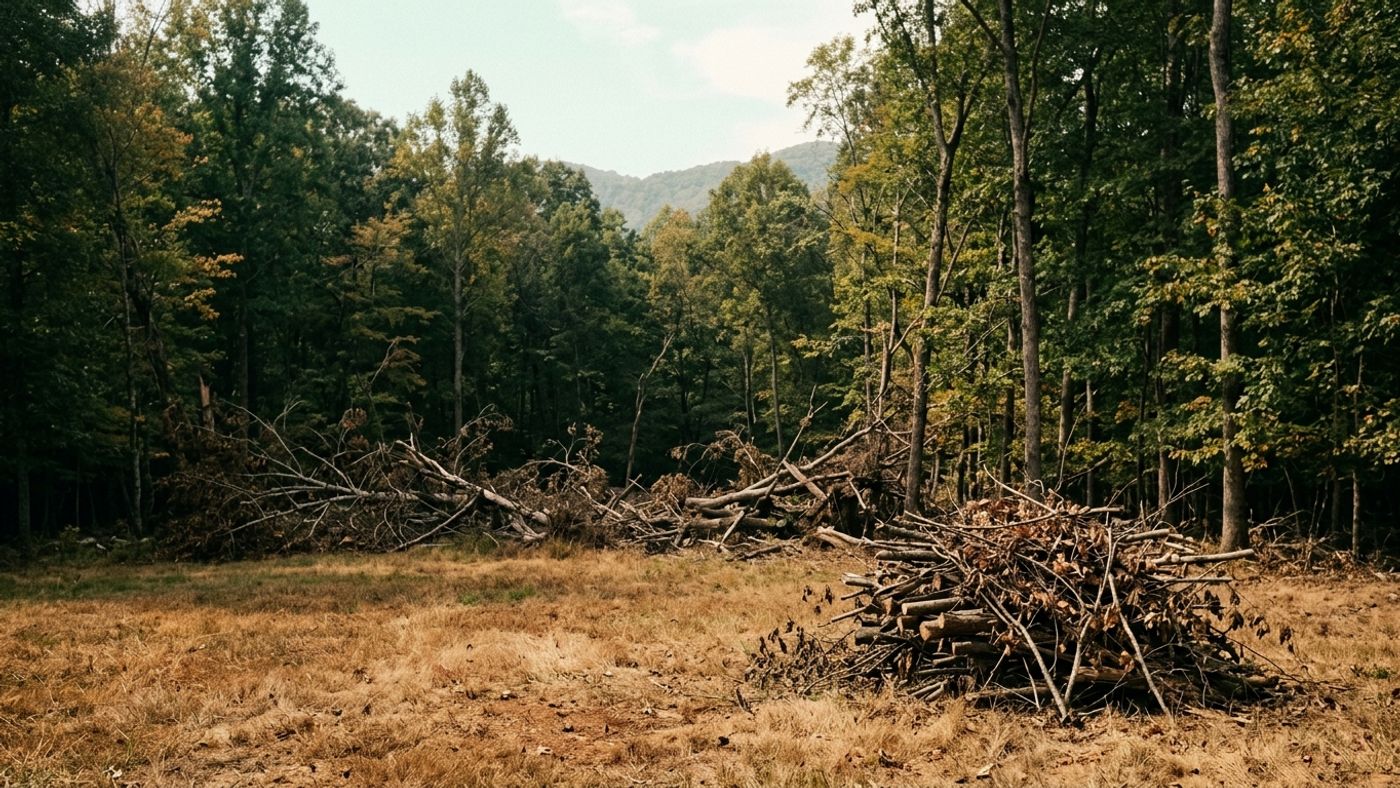
More than two years after Hurricane Helene tore through the mountains of western North Carolina, the storm's debris is still the region's biggest wildfire problem. State forestry officials estimate the hurricane damaged roughly 822,000 acres of forestland across 25 western North Carolina counties, and researchers say the resulting fuel load will keep wildfire risk elevated for 10 to 20 years. For anyone maintaining properties in or near the affected counties, including parts of South Carolina that share the same terrain, this is not a storm that finished causing problems when the wind died down.
The mechanism is straightforward. Fallen trees, broken limbs and torn up vegetation dry out over time, and small debris in particular dries quickly and becomes easy fuel. That buildup already produced a spike in wildfire activity in spring 2025, and officials have said dry, windy stretches continue to elevate fire potential across the region each time conditions turn dry. Steep mountain terrain makes the problem worse, since debris stacked on a slope is harder for fire crews to reach and often buries the old roads and firebreaks that would normally slow a fire's spread.
Why this changes property maintenance, not just forest management
For a property near forested land in the affected counties, the practical question is what is sitting within reach of the structure. Wildfire risk around a home is driven heavily by what surrounds it in the first several feet, and a property near Helene damaged woodland may have accumulated more debris close to structures, fences and outbuildings than it did before the storm, simply because so much material came down at once and clearing it all has taken years.
What to check this fall
A property walk through in fire prone areas should note any fallen limbs, downed trees or storm debris still sitting near the house, garage, deck or fence line, and arrange for removal rather than leaving it to break down in place. Leaf litter and dead vegetation against the foundation or under decks should be cleared, gutters should be free of debris, and firewood or other combustible storage should sit away from exterior walls. Overhanging or dead branches close to the roofline are worth pruning back, since they add fuel directly above the structure.
Because debris removal at this scale is a multi year regional effort, and forestry officials have said progress so far only makes a small dent compared to the scope of the damage, an individual property's own perimeter is the part that maintenance can actually control. Clearing that perimeter now, before the next dry, windy stretch arrives, is a smaller and cheaper task than responding after a fire has already reached a property line.
Drought is compounding the problem this year. North Carolina is in an active, worsening, year long drought as of late September 2026, with roughly 58% of the state under some level of drought classification, and state environmental officials have specifically flagged worsening conditions in Cherokee, Haywood and Swain counties, all in the western part of the state. Dry ground and dry debris together raise fire potential well beyond what either factor would cause on its own.
Hurricane Helene is more than two years in the past, but its debris is still an active hazard, and treating it that way is what keeps a routine fall clearing from becoming an emergency response later.