
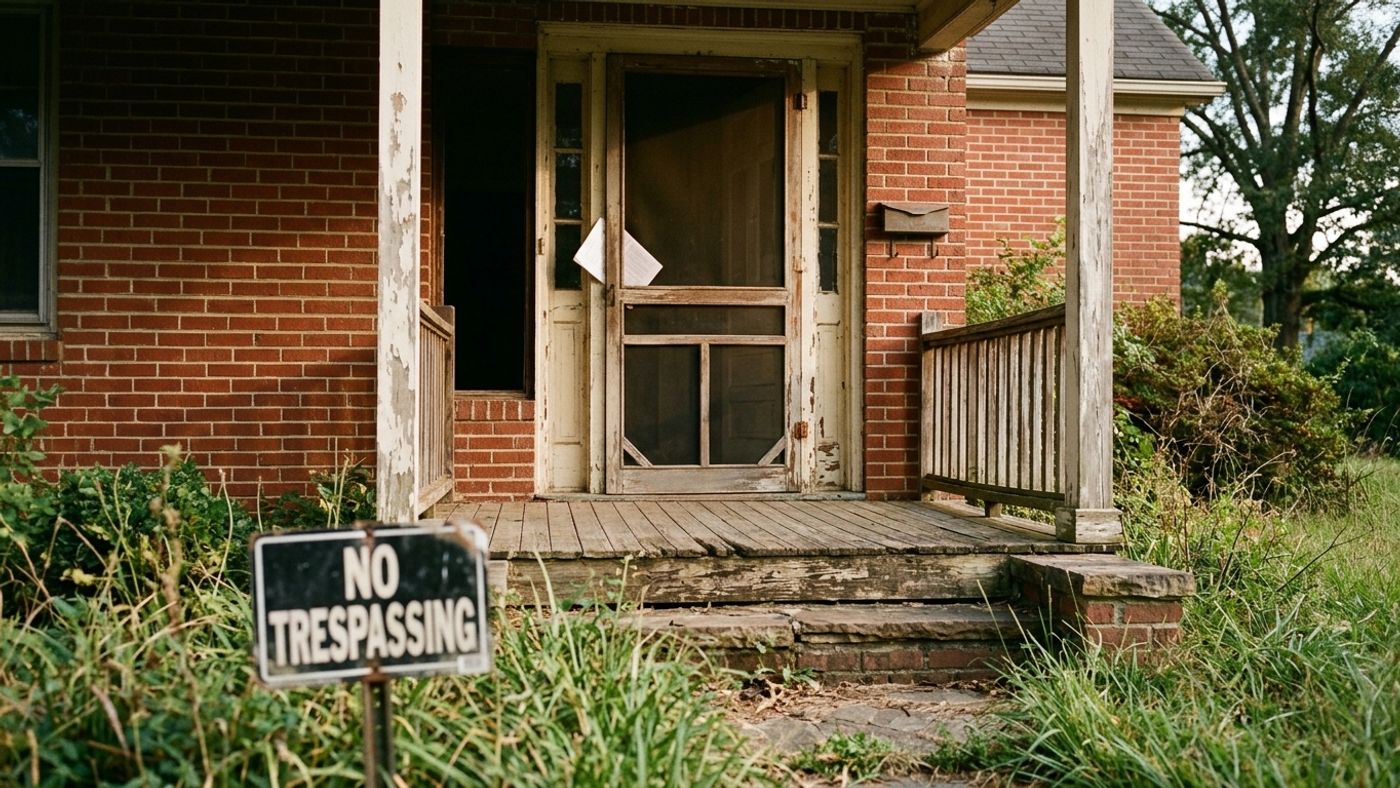
South Carolina property owners can now have a magistrate order an unauthorized occupant removed from a residential property within 24 hours of filing a petition, under a law Governor Henry McMaster signed after it passed both chambers of the state Legislature unanimously on June 25. The law creates an expedited, ex parte process specifically for situations where someone is occupying a property without a lease, without permission, and without a family relationship to the owner.
Under the new process, an owner files a petition stating the occupant was asked to leave and refused, that no landlord-tenant relationship exists, and that there is no pending lawsuit over the property. If those conditions are met, a magistrate can issue an immediate removal order without hearing from the occupant first, then must hold a full hearing within 24 hours. County sheriffs or constables enforce the order, and violating it is a felony. Causing more than $1,000 in damage while illegally occupying the property is a separate felony offense under the law.
North Carolina and Florida Already Moved on This
South Carolina is not the first Southeast state to shorten this process. North Carolina's Expedited Removal of Unauthorized Persons law took effect December 1, 2025, letting owners file a complaint with the clerk of court and get a sheriff to serve the occupant within 24 hours, with a hearing typically held within 48 hours and removal within 4 hours of a court order. Florida enacted its own sheriff assisted removal statute in 2024, and Georgia and Texas have comparable laws on the books.
The pattern across all of these laws is the same: replace a general eviction process built for lease disputes with a faster, narrower process built for occupants who never had a lease at all. South Carolina lawmakers considered routing the new process entirely through sheriffs, similar to Florida's model, before settling on the magistrate-based system already used for comparable disputes in that state.
What This Means for Vacant Property Owners
For owners of vacant or REO property in North Carolina, South Carolina or Florida, the practical shift is speed. A process that used to take weeks through traditional eviction proceedings can now move in days, provided the paperwork is filed correctly and the occupant genuinely has no lease or tenancy claim. That last point matters. Advocacy groups have flagged the risk of the faster process being misapplied to actual tenants, who still have separate protections under standard landlord tenant law.
Documentation is what separates a straightforward filing from a contested one. Property owners who keep dated records of vacancy status, entry attempts, and any communication with an occupant put themselves in a far stronger position to use these faster laws the way they were written to be used.