
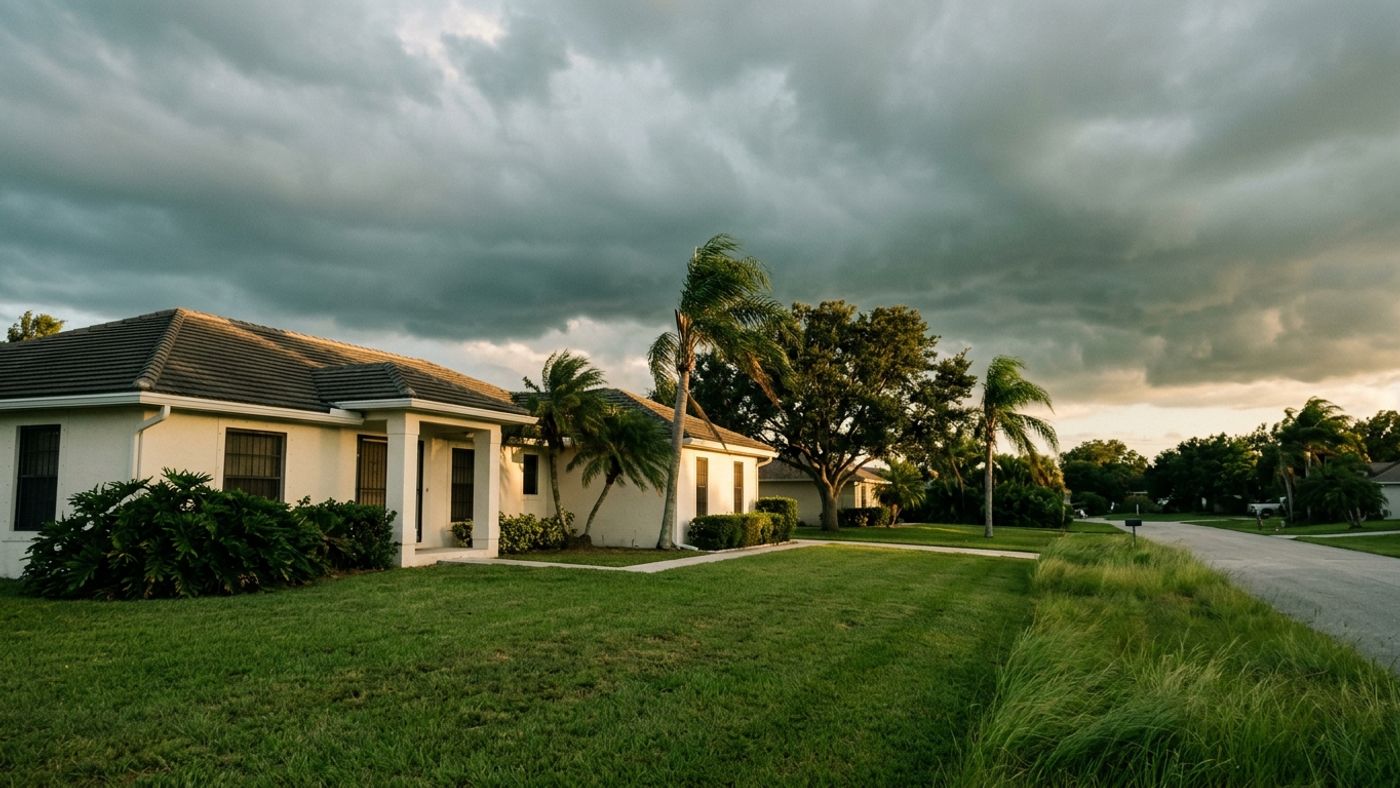
As of late September 2026, the Atlantic has not produced a single hurricane, the longest a season has gone without one since satellite records began and the longest since 1914. That does not close the book on vacant property maintenance for the year. Hurricane season runs through November 30, and the Carolinas and Florida can still take a hit.
A very strong El Niño explains the calm. It increases wind shear over the Atlantic, which tears storms apart before they organize, while the Pacific has produced one strong hurricane after another. NOAA's outlook called for a below normal season, with 7 to 13 named storms in its August update. Only a handful of relatively weak, short lived tropical storms have formed so far. Forecasters have stressed that the total number of storms says little about how destructive a season will be.
Quiet seasons have still produced serious damage
History is a good reason to stay alert. Hurricane Helene came ashore in Florida's Big Bend as a Category 4 storm on September 26, 2024, and Hurricane Milton struck near Siesta Key as a Category 3 on October 9, less than two weeks later. In 1992, only seven named storms formed all season, yet Hurricane Andrew became a Category 5 and devastated South Florida. Total storm counts say very little about what a single storm can do.
Storms also do not need hurricane strength to cause problems. Inland rainfall is a major cause of storm damage, which is why forecasters urge preparation for every system, even one that never becomes a hurricane. This year's Tropical Storm Arthur, for example, dropped record rainfall on parts of Louisiana. A slow, wet tropical storm can flood a yard and soak a roof just as easily as a stronger one.
Vacant property maintenance before the next storm
Vacant homes have nobody inside to spot early damage, so the checks need to happen before a storm shows up in the forecast. Start with the roof, looking for missing or lifted shingles and cracked flashing. Clear the gutters and downspouts so water moves away from the foundation, trim loose or overhanging limbs, and remove yard debris and loose items that wind can throw around. Take note of mature trees close to the roofline, since a single fallen limb can open a roof to rain. Confirm that doors, windows and garage entries are properly secured, and check drainage and any sump pump on the property.
A dated photo record of the property before a storm makes it much easier to show what changed afterward. After the weather passes, a quick inspection of the roof, ceilings, windows and yard tells you whether water got in and whether anything came down. Reporting that promptly keeps a small problem from turning into a bigger one. Fast reporting also gives the property owner or servicer time to arrange repairs before the next round of weather.
For anyone managing homes across several counties, the practical challenge is having local vendors lined up before a storm, not scrambling for them afterward.
The calm so far is real, but preparation is cheap insurance against the weeks that remain.