
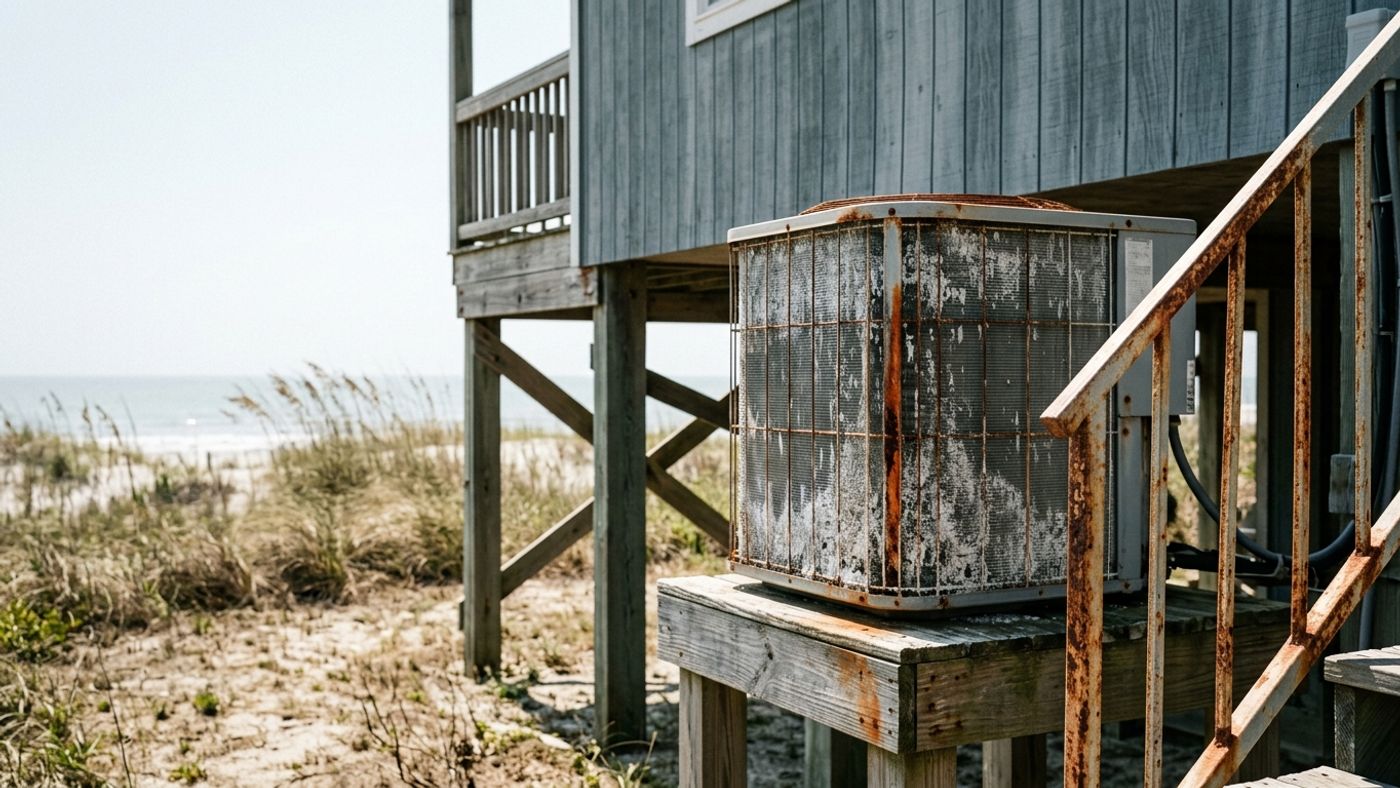
Salt carried on ocean breezes settles on every exposed metal surface near the coast, and in a humid climate it turns into a corrosive film that wears down equipment faster than most owners expect. Along the South Carolina coast, from North Myrtle Beach and Myrtle Beach through Georgetown, Charleston, Beaufort and Hilton Head Island, salt air is a constant part of the environment. For anyone responsible for vacant property maintenance in South Carolina's coastal communities, it changes how often a property needs attention and what needs checking first.
The outdoor air conditioning unit takes the worst of it. Condenser coils are made of thin aluminum fins and copper tubing, and the unit pulls outside air across them every time it runs. Salt deposits on those fins corrode the metal, cut the unit's ability to move heat and can eventually lead to refrigerant leaks and failure. Homes closest to the ocean see the damage fastest, but salty air travels miles inland on the breeze. Exterior metalwork suffers too: railings, fasteners, hinges, light fixtures, garage door hardware, mailboxes and even lockboxes can rust, seize or fail well ahead of their inland equivalents.
Salt Air and Vacant Property Maintenance in Coastal South Carolina
On an occupied home, owners tend to spot rust or a struggling AC unit and call someone. On a vacant property, nobody is watching, and the AC may sit idle for long stretches. Corrosion keeps working whether the unit runs or not, and a condenser that hasn't been cleaned in a year can be in poor shape by the time the home is listed or rented. A rusted door lock or lockbox can also create access problems on the very day an agent, buyer or vendor needs to get in.
Regular rinsing helps more than most people realize. Gently washing the outdoor condenser with fresh water removes salt buildup before it does lasting damage, and coastal HVAC specialists generally recommend professional coil cleaning more often for homes near the water than for inland properties. When a unit needs replacing, coastal rated equipment with protective coil coatings is built to hold up better in salt air. Keeping vegetation and debris clear of the condenser also helps it breathe and dry out between rain and sea spray.
Building a Coastal Maintenance Routine for Vacant Homes
For asset managers overseeing vacant or REO homes along the Grand Strand and the Lowcountry, the simplest approach is to treat coastal properties on their own schedule. Each visit should include a look at the AC condenser for rust, flaking fins or salt crust, a check that exterior locks, lockboxes and gate latches still work smoothly, and a walk around railings, stairs and exterior lighting for corrosion that could become a safety issue. Lubricating locks and hinges, replacing badly rusted fasteners and documenting condition with photos keeps small problems from turning into failed equipment or liability concerns.
Salt air doesn't take time off, and neither can maintenance on a coastal vacant home. East West Maintenance coordinates property maintenance and field services for vacant and REO properties across South Carolina, North Carolina and Florida, including the coastal communities where salt air shapes the work.