
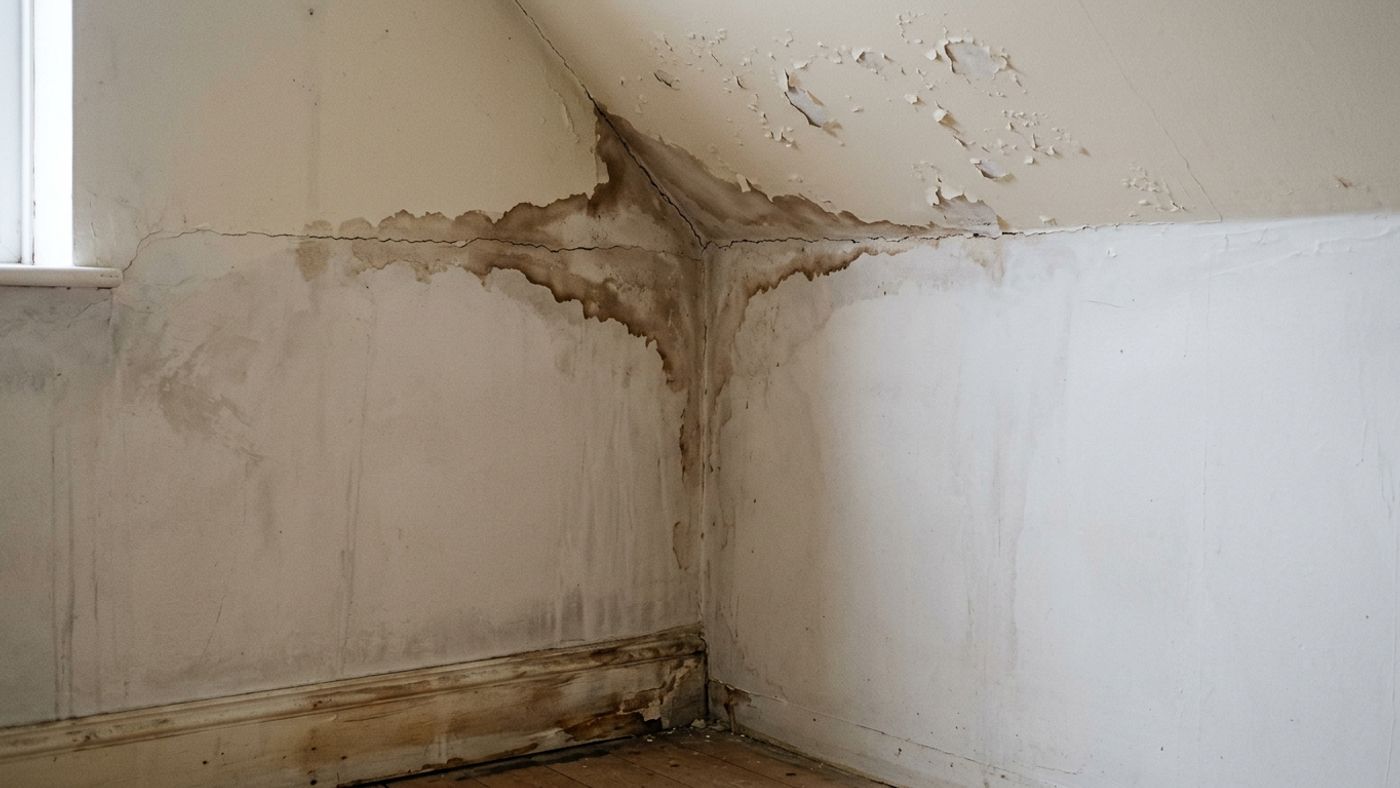
Water damage and freezing made up 22.6% of homeowners insurance losses in 2023, the latest year the Insurance Information Institute reports, and the average claim over 2019 to 2023 was about $15,400. About one in 60 insured homes files one each year. In an occupied house, someone usually notices a drip or a stain within days. In a vacant house, water damage can run for weeks before anyone walks in, which is why checking for leaks belongs in every vacant property inspection in North Carolina, South Carolina and Florida.
Time is the cost driver. EPA guidance says water damaged areas should be dried within 24 to 48 hours, and that mold will usually not grow if wet materials are dried in that window. A Horry County, South Carolina restoration company described a water heater leak in a vacant vacation home that went unnoticed for up to two weeks and damaged about 1,500 square feet of flooring, with elevated humidity and visible mold on the walls. One case is not a statistic, but it shows how fast an unwatched leak compounds.
Where Do Leaks Start in a Vacant House?
The usual sources are the ones with pressure or moving water: the water heater, supply lines and shutoff valves under sinks, washing machine hoses, toilet supply lines and ice maker lines. Air conditioner condensate drains and drip pans matter too, and EPA advises keeping drip pans clean and drain lines clear. Outside, clogged gutters and ground that slopes toward the foundation send water to the house, and a failed roof section usually shows up as a stain on the ceiling below it. Frozen pipes are the cold weather version of the same problem, so the first hard freeze is a good reason to confirm whether the plumbing has been winterized.
What Should Be Checked for Leaks on Every Visit?
A short routine catches most early leaks:
- Look up and around. Check ceilings, the walls under bathrooms and the area around the water heater for stains, bubbling paint or soft drywall.
- Open the cabinets. Look at the supply lines and traps under every sink for drips, corrosion or damp wood.
- Check the floors. Look for warping, cupping or damp carpet, and note any musty smell.
- Test the meter. If water service is on, close every fixture and watch the meter; movement means water is going somewhere.
- Walk the exterior. Check gutters, downspout extensions, grading and roof edges.
- Photograph and date everything, including the room and the location of any stain.
Whether to keep water service on in a vacant house is a decision for the owner or servicer, and investor rules can dictate it. Shutting off and draining the system removes the pressure that drives most leaks, while leaving it on keeps fixtures usable for cleaning and repairs.
Does Insurance Cover a Slow Leak in a Vacant Home?
Often not in full. Policies commonly cover sudden and accidental water damage but deny damage that built up gradually, and many policies change their terms once a home has been vacant for 30 to 60 days. Our guide to the 60 day vacancy clause explains what changes. A dated inspection record is the practical protection: it shows when the property was last checked and what condition it was in. This is general information, not insurance advice, and the policy wording controls.
Can Leak Sensors Replace an Inspection?
Sensors placed near the water heater, washing machine hookups and under sinks can send an alert between visits, and restoration firms recommend them for second homes and vacation properties. They add a layer of warning but do not replace a walk through, because a sensor only helps if it has power, a working battery and a connection. Treat sensors as a supplement to a regular schedule, not a substitute for one.
A vacant house cannot report its own leaks, so the inspection routine has to do it. East West Maintenance coordinates inspections, plumbing and drywall repair, flooring repair and dated photo reports for property managers and asset holders with vacant homes across North Carolina, South Carolina and Florida.