
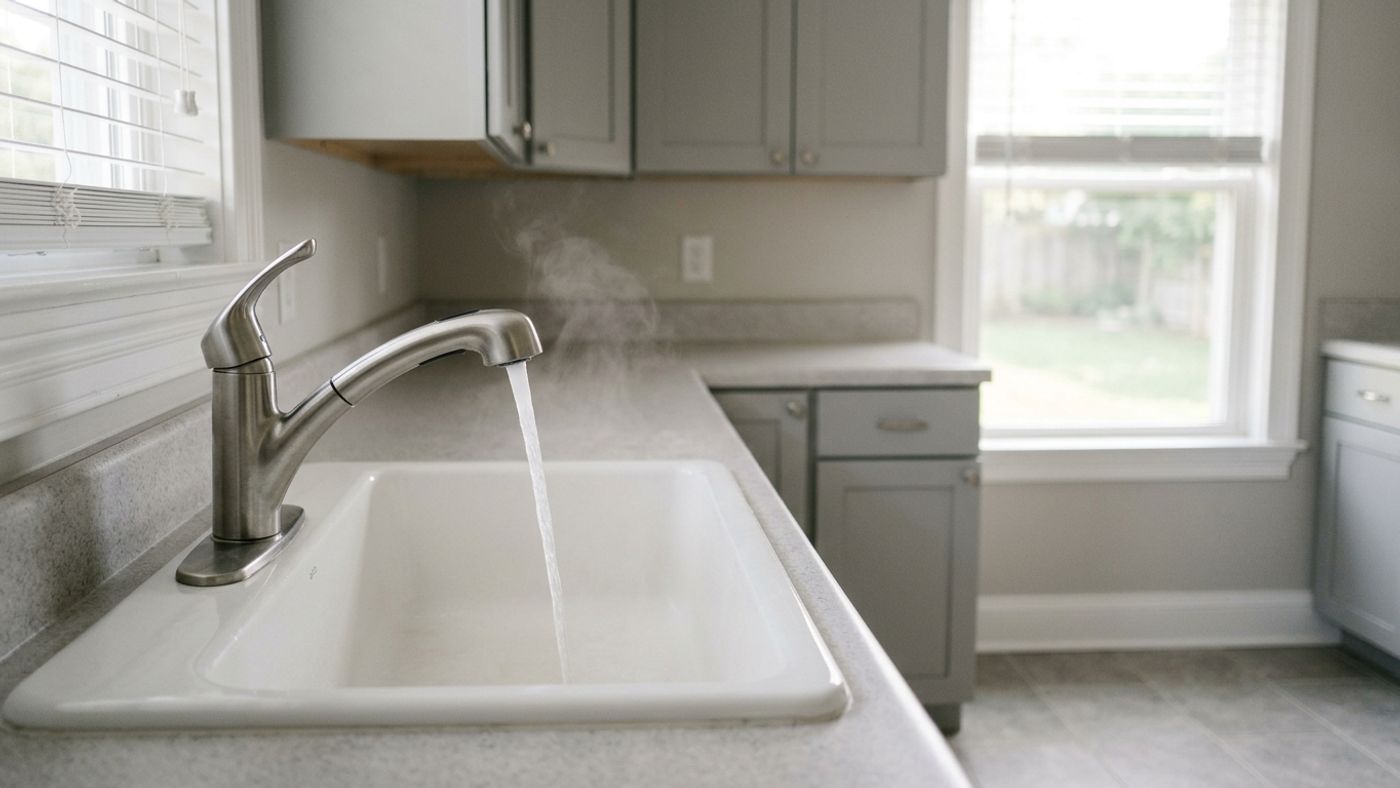
Water that sits unused in a vacant house’s pipes can cool into the 77°F to 113°F range where CDC says Legionella grows, and its disinfectant can drop. CDC’s remedy is flushing: run hot and cold water at every outlet until fresh water has replaced the old. Neither CDC’s nor EPA’s guidance was written for single family homes, so the steps below adapt it. Decisions about water heaters and disinfection belong to a licensed plumber.
Why standing water in a vacant home is a problem
CDC says stagnant water can raise the risk of Legionella growth and spread, because hot water temperatures can drop into the growth range and disinfectant levels such as chlorine can fall. People with weakened immune systems are at higher risk of Legionnaires’ disease.
How to flush a vacant house, step by step
EPA’s guidance for low use buildings gives the order, and CDC supplies the safety points.
- Start where water enters. EPA says to flush the service line from the main to the building first, then work from the entry point toward the farthest tap, cold before hot.
- Hit every outlet. That means faucets, showers, toilets, and water using devices such as dishwashers and ice makers. Follow manufacturer instructions for appliances.
- Run hot water until it reaches its maximum temperature. CDC and EPA both use this goal, and EPA says hot water ideally reaches 120°F or higher at the tap.
- Keep splashing down. CDC advises minimizing splashing and aerosol generation.
- Refill drain traps. EPA says to fill all drain traps with water so sewer gases cannot enter the building during flushing.
- Watch for leaks while the water runs. A restored supply is when hidden failures show up.
The water heater
CDC says to set the water heater to at least 140°F, with hot water at the tap at 120°F or higher where possible. Higher temperatures reduce risk but require scald prevention. EPA adds that heaters and storage tanks should be drained and cleaned per the manufacturer before reopening, and that disinfection or heat treatment should follow ASHRAE Guideline 12 and be done by trained professionals. On a vacant home, whether the heater is on, off or drained is a plumber’s call.
Who should not do the flushing
CDC advises people with weakened immune systems to consult a medical provider before flushing or other aerosol-producing work. It says an N95 type respirator may be appropriate in enclosed spaces where aerosols are likely, but only within a respiratory protection program that includes fit testing, training and medical clearance.
Homes on a private well
CDC’s and EPA’s documents are written for buildings on regulated supplies. They do not address private household wells. For a vacant house on a well, ask the county health department what testing it recommends before reoccupancy. That is our advice, not an agency statement.
How often should it happen?
We found no fixed interval or minute count for single-family homes in the CDC page or the EPA PDF. EPA says to contact the water utility during a closure and to consider contacting the local health department before reopening. A monthly inspection schedule may or may not match what a building’s water plan needs, so make that a decision the owner makes knowingly.
What to log on each visit
Record the date, which outlets were flushed, how long each ran, whether hot water reached its maximum temperature, any leaks found, and a photo of the water heater setting. If the house was winterized, flush when the water is restored.
East West Maintenance coordinates inspections and plumbing repairs through local vendors for property managers and asset holders with vacant homes across North Carolina, South Carolina and Florida.